Songs That Saved Me: A Playlist for Everyone Who Cries in the Car Alone
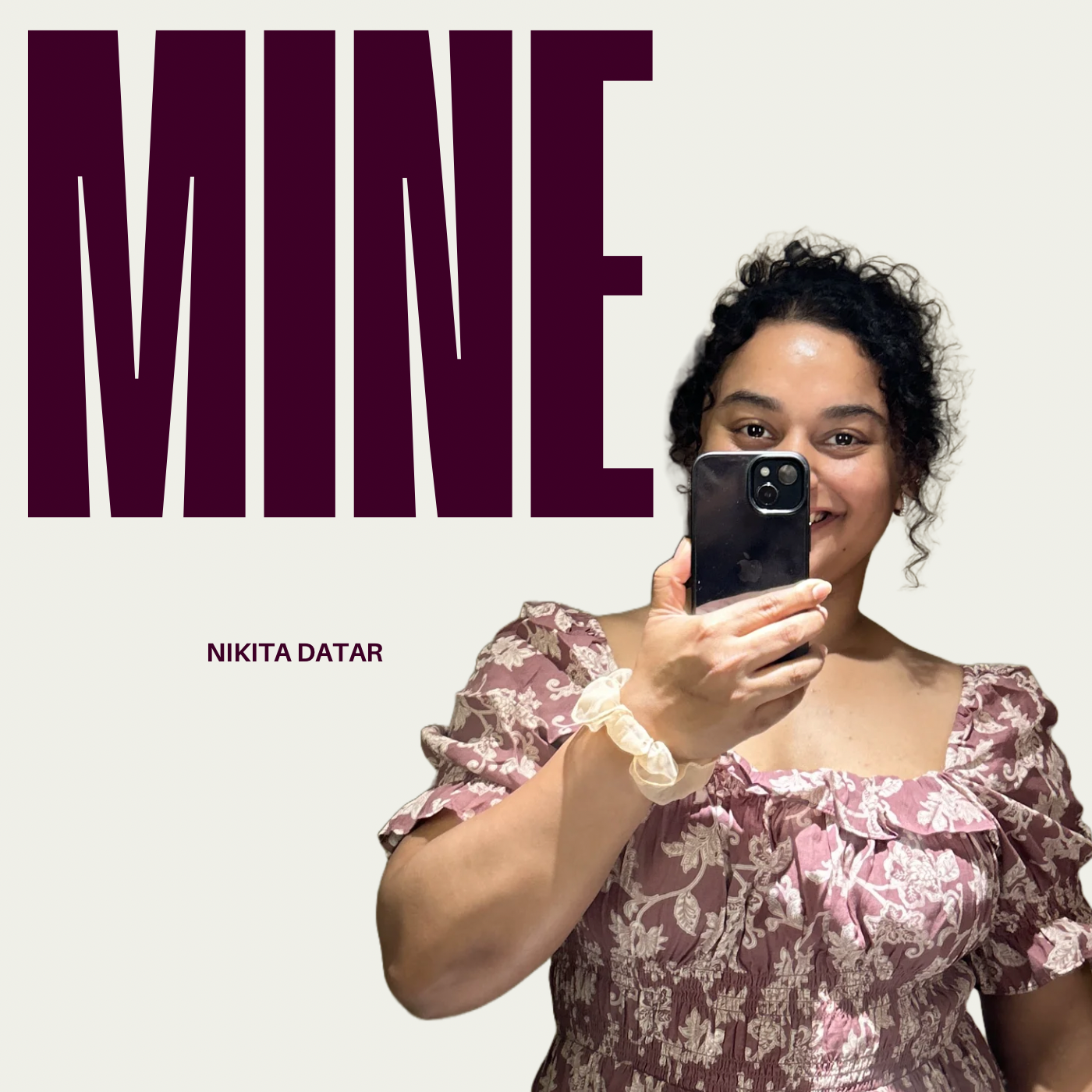
A curated playlist of songs for healing, longing, and the quiet work of becoming yourself. Songs that hold what words cannot. With MINE by Nikita Datar.
There is a specific kind of listening that happens alone in the car.
You are driving somewhere ordinary — the grocery store, work, a friend's house — and a song comes on and something cracks open. You are not prepared for it. You were not looking for it. But the song found the exact place inside you that needed to be found, and now you are crying at a red light and you have to sit there until the light turns green and you can drive away and no one will know.
This is not incidental to music. This is what music is for.
The songs that do this are not always the ones that are technically perfect. They are the ones that are honest in a way that other things in your life are not always honest. The ones that name something you were carrying without language. The ones that make the grief legitimate by existing.
This is a playlist of those songs. Songs that held me when I was in the middle of something I could not yet name. Songs for longing, for the wounds that shaped you, for the work of becoming yourself when that work is slow and non-linear and sometimes looks like sitting in a parking lot crying for reasons you cannot fully explain.
MINE — Nikita Datar
I wrote this song on one of the worst days of my life. It is about still longing for your mother and your father as a grown woman — the specific grief of still reaching for something that was not quite given. The chorus: I'm still the woman who craves her mom / Still the girl who longs for her dad / But I'm one step closer to being mine. I sat on it for two years. It is the most honest thing I have made.
The Mother — Brandi Carlile
Carlile wrote this for her daughter and it breaks people who did not have a child who had it. It is about unconditional love so complete it feels like grief, because it makes visible by contrast everything you needed and did not get. Research by psychologist Sue Johnson at the University of Ottawa on attachment and emotion regulation found that certain emotional experiences can trigger what she calls secondary grief — grief for your own unmet needs activated by witnessing needs being met. This song does that.
Family Portrait — Pink
One of the few mainstream songs to address parental conflict and its impact on children with no resolution. Pink wrote it about her own parents' marriage falling apart, and the detail — "I don't want to have to split the holidays" — is the kind of specific that only real experience produces. It named something for a generation of people who grew up in houses where the adults were unhappy.
Motion Sickness — Phoebe Bridgers
About leaving someone who cannot see you clearly. The line "I hate your mom / I hate it when she opens her mouth" is jarring and honest in a way that most songs about relationship difficulty are not. Bridgers writes about relational damage with the precision of someone who has done real work to understand it. Her debut album Stranger in the Alps was described by music journalist Ann Powers as one of the most emotionally accurate records of the 2010s.
Appointments — Julien Baker
Baker writes from inside her experiences rather than from a perspective of having moved through them. The line "Maybe it's all gonna turn out alright / And I know that it's not" holds contradiction without resolving it, which is more honest than most music about healing. Her production is sparse enough that there is nowhere to hide from what the song is doing. This is a car-alone song.
Clean — Taylor Swift (1989)
Swift's most underrated song about healing. It is not about a person — it is about the experience of being over something, and the specific ordinary moment when you realize you are over it. Musicologist Carl Wilson, writing about Swift's work, noted that Clean represents a shift in her songwriting toward internal emotional experience rather than external narrative. The rain metaphor is simple and perfect.
Shake It Out — Florence + The Machine
Florence Welch wrote this about depression and the recurring difficulty of choosing to live despite it. The refrain "it's always darkest before the dawn" is a cliché everywhere else and somehow not a cliché here. Welch has spoken in interviews about writing from a place of genuine darkness, which may be why the song carries the weight it does. The drums are the sound of deciding to stay.
I Need My Girl — The National
Matt Berninger's baritone and the National's instrumentation create a kind of interior space that few other bands access. This song is about grief and loss but also about the ordinary specific way a person can be missing — not just absent but missed in particular. The National's music was studied by music psychologist Stefan Koelsch at the University of Bergen, whose research on music and emotion found that minor keys and slower tempos activate regions of the brain associated with processing genuine sadness rather than performed sadness.
Stick Season — Noah Kahan
About a specific landscape and a specific grief that is inseparable from place. Kahan writes about Vermont but what he is writing about is the feeling of being left behind in a life that has stopped moving. His songwriting is extremely specific in the way that great writing is always specific — it is about one particular thing and because it is about one particular thing it is about everything. Released in 2022 and still compounding.
Breathe (2 AM) — Anna Nalick
One of the most accurate songs about the experience of being overwhelmed that has ever been written. The instruction — just breathe — is not advice. It is recognition. Someone else has been in this exact moment. That recognition is what music at its best provides.
Lua — Bright Eyes
Conor Oberst wrote this about shared fragility — two people finding each other in their worst moments. It is quiet and specific and contains the line "I know that it is freezing but I think we have to walk." That line. When you know what it costs to keep walking and you do it anyway.
Dog Days Are Over — Florence + The Machine
The emotional arc of this song — from tentative to enormous — mirrors the actual movement of healing when healing moves. It is not subtle. It does not need to be. There are moments in healing that are not subtle, and this song is for those.
A note on crying in the car
The car is one of the few places where adults in most cultures have genuine privacy and permission to feel. You are contained, moving, alone, and the music is loud. Psychologist James Gross at Stanford University, whose work on emotion regulation is among the most cited in the field, has studied what he calls expressive suppression — the tendency to suppress emotional expression in social contexts. His research found that expressive suppression has real physiological costs, including increased sympathetic nervous system activity and impaired memory consolidation.
The car, in other words, is not just where you cry. It is where you let yourself process what you have been not-processing everywhere else. The music helps. The movement helps. The temporary privacy of being alone in a metal container going somewhere ordinary helps.
These songs are for that. For the red light, the parking lot, the long drive home. For carrying something that needed to be carried out loud for once.
You are allowed to feel this.
Nikita Datar · Debut Original · September 25, 2026
MINE
Now available on all streaming platforms
Listen to MINE →Continue exploring