The Mother Wound Doesn't Go Away When Your Mother Is Still Alive
Grieving a living mother is one of the least socially recognized forms of loss. This is what the mother wound looks like when your mother is still here, why it is so hard to name, and what healing requires when there is no clear ending.
People know how to respond to the loss of a mother who has died.
They know the casseroles, the condolence cards, the language of grief. They know how to hold space for the absence when there is a clear moment of loss, a before and after, a funeral that marks the ending.
They do not know what to do with the grief of a daughter whose mother is alive.
The mother is there. She answers the phone or she does not answer the phone. She comes to things or she does not come to things. She is present in a way that is supposed to make everything else fine. Your feelings — the reaching, the longing, the grief for something you cannot name because nothing has ended — have nowhere to go. There is no social script for this. There is just you, carrying something that does not have a form that other people can see.
What the research says about this kind of grief
Pauline Boss, a family therapist and professor emerita at the University of Minnesota, spent four decades developing the concept of ambiguous loss — grief over losses that lack clear definition or social recognition. Boss originally wrote about families of soldiers missing in action, and later about the grief of those caring for relatives with dementia — physically present people who are psychologically absent. Her work established that ambiguous loss is among the most difficult kinds of grief precisely because the ordinary supports of grieving do not apply.
When someone dies, grief has a structure. When someone is alive but unreachable — present but not present, there but not there — the grief has no structure. It exists without permission. It cannot be named because the loss has not been socially ratified. And so it accumulates, unnamed, in the body and the relationships and the quiet internal reaching that does not stop.
The mother wound, as psychologists and researchers including Bethany Webster have described it, is a specific manifestation of this: the grief of a daughter who needed more from her mother than her mother could give. The wound is not necessarily caused by cruelty. It is caused by absence — the emotional unavailability of someone whose presence was essential. Webster's work, drawing on depth psychology and feminist theory, describes the mother wound as one of the primary unhealed wounds in women's lives, because the mother is the first mirror. What is reflected there — or not reflected — shapes everything that follows.
What it looks like in adult life
It looks like still reaching.
It looks like a grown woman who checks her phone when her mother calls and feels a complicated thing that she cannot name. Who sometimes still wants, in moments of difficulty, the specific comfort of her mother in a way that surprises her. Who has long since accepted that this comfort is not available in the form she needed it and who still, in unguarded moments, reaches for it.
It looks like the way certain things can suddenly crack you open — a song, a scene in a film, a stranger's child being held in a particular way — and you feel something that is not quite sadness and not quite longing and is maybe the closest thing to both.
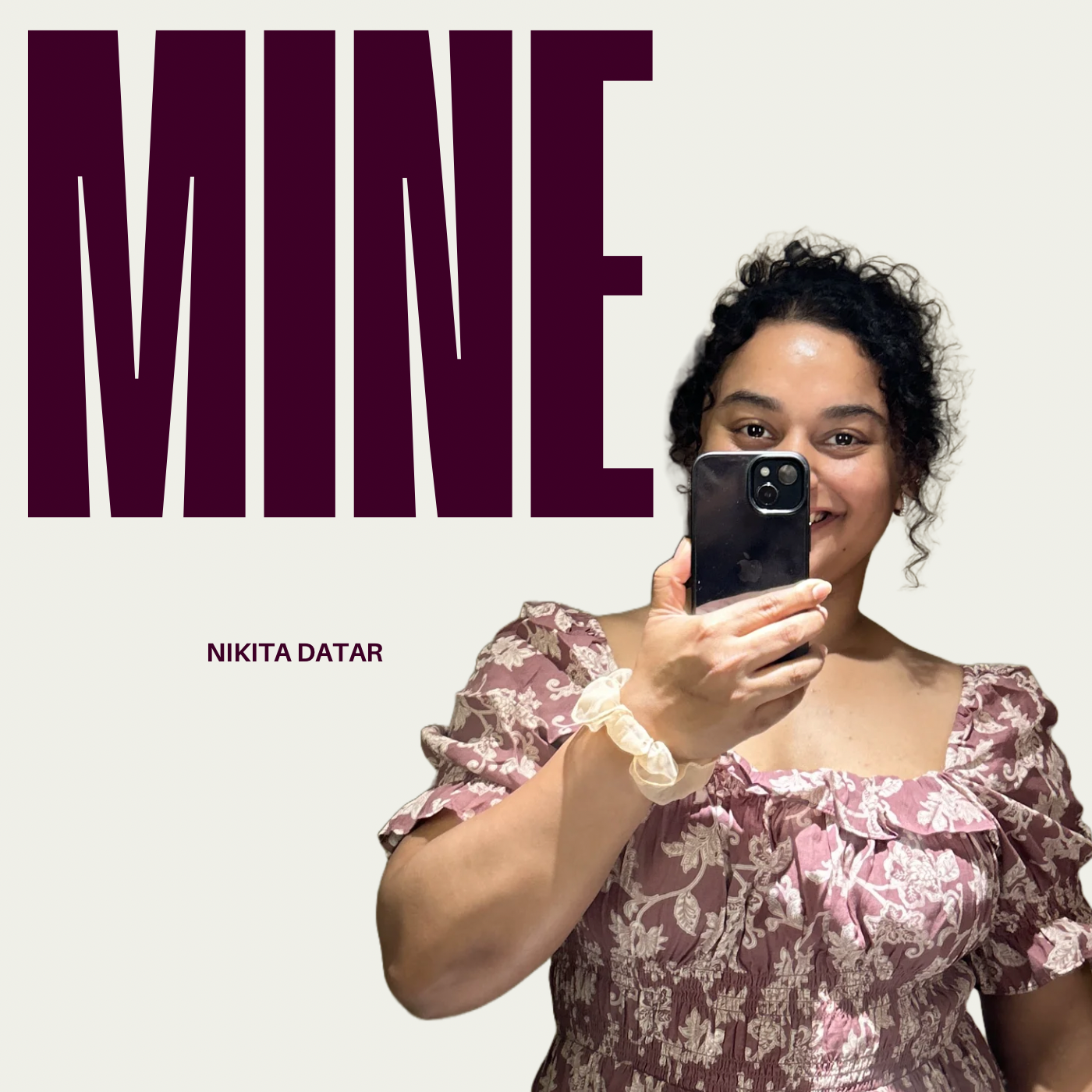
I wrote a song about this. About still longing for your mother as a grown woman, still carrying that specific grief, still moving toward belonging to yourself despite it. The chorus says: I'm still the woman who craves her mom. Not was. Not used to be. Still. Present tense. Because the wound does not resolve on a timeline. It moves when you let it, and it stays when you don't, and for most people it does both.
It looks like complicated relationships with other women — with friends, with partners, with your own body — that are shaped by what you did not receive in the first relationship. Attachment researchers including Mary Main at the University of California, Berkeley, documented through the Adult Attachment Interview that unresolved loss in early attachment relationships shapes adult patterns of relating in measurable, specific ways. The mother wound does not stay in the past. It shows up in the present.
Why it is so hard to name
Three reasons compound each other.
Your mother is still alive. This means the loss has not been ratified socially. It means you can still hope, in some part of yourself, that something will change or be given. It means you carry both the grief and the hope simultaneously, which is one of the most exhausting combinations a person can carry.
The cultural script says you should be grateful. Mothers are idealized in ways that make it difficult to acknowledge that your particular mother could not give you what you needed. The idealization is not neutral — it actively suppresses the grief. It makes naming the wound feel like a betrayal of someone who is still alive to be betrayed.
The wound is made of absence, not event. There is no clear moment when the damage was done. There is only the accumulation of moments when something was needed and was not there. Absences are invisible. They do not announce themselves. They are only felt, over time, as a shape that should be filled.
What becomes possible when you name it
Naming it does not fix it. Your mother does not become different. The childhood does not change.
What changes is your relationship to the grief itself.
When you name ambiguous loss as loss, you give it a place to exist that is not inside you disguised as self-blame, or anxiety, or the specific hollowness of chronic reaching. You allow yourself to grieve something real that happened — or rather, something real that did not happen — without requiring the social ratification of a clear event or a living person's acknowledgment.
You also begin to disentangle the grief from the identity. The wound has been shaping you — your needs, your patterns, your sense of what you deserve — from before you had language for it. Naming it is the beginning of understanding which parts of yourself are you and which parts are the adaptive strategies of a child who needed more than she got.
Bethany Webster describes this work as moving from mother wound to mother gift — not a reframe that denies the wound, but a gradual process by which the very depth of the wound becomes the source of the capacity for depth. The grief you carry about your mother is proportional to how much you needed her. That need was not pathological. It was human. It was correct.
You are allowed to grieve your mother while she is still alive.
You are allowed to name the reaching, the longing, the presence-that-was-absence.
The grief does not mean you do not love her.
It means you needed her, and you are still here, and you are learning to be yours.
Nikita Datar · Debut Original · September 25, 2026
MINE
Now available on all streaming platforms
Listen to MINE →Continue exploring