What 35 Books About Healing Taught Me About Writing One Song
The thing that can live in a four-minute song that 1,700 pages cannot contain.
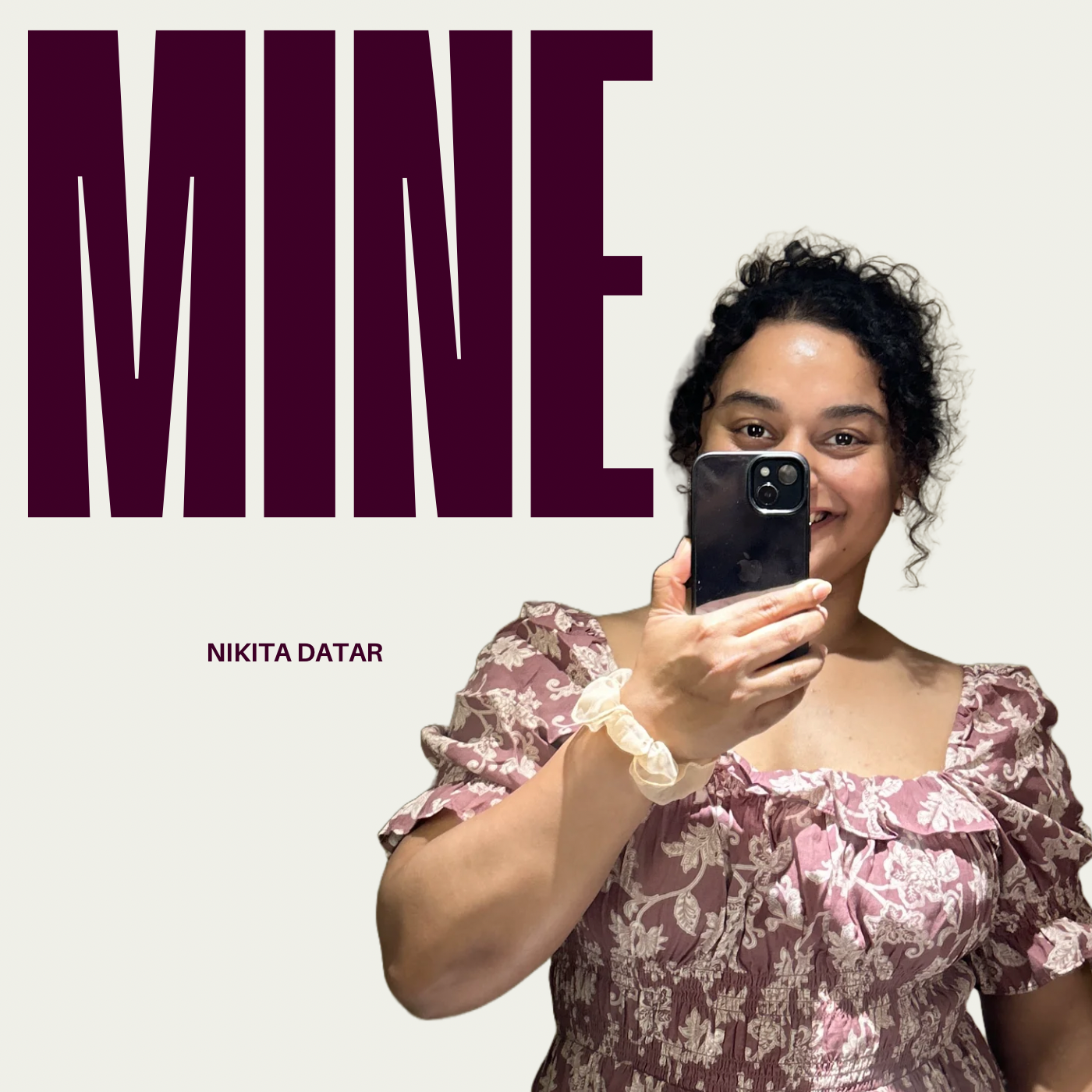
I have written 35 books.
Across those books, I have covered the mother wound, the father wound, attachment patterns, inner child work, the psychology of belonging, emotional immaturity in parents, self-belonging, grief, longing, and the specific work of becoming the person you needed when you were young.
I have written 1,700 pages on nikitadatar.com. I run a Substack with hundreds of readers actively doing this work. I have citations from Bowlby and Siegel and Bessel van der Kolk and Bethany Webster and James Hollis and Peter Levine. I understand the research and I have done my best to make it accessible to people who are in the middle of their own healing.
And then I wrote MINE, a four-minute song, and it did something the 35 books could not do.
What the books do well
The books are maps.
A good map shows you the terrain you are in. It names the features, gives them correct labels, helps you understand where you are in relation to where you want to go. When someone reads Healing the Mother Wound and says "I finally understand why I feel this way," that is the map working. They now have language for something that was previously only texture. They have a framework for understanding a pattern that was running their life without their awareness. That is genuinely useful.
The same is true for Healing the Father Wound and You Are the Love You Seek. The books provide structure. They make the invisible visible. They give people permission to name what they are experiencing by showing them that what they are experiencing has a name.
That matters. Do not underestimate how much it matters to finally have a word for something you have been feeling for twenty years.
What the books cannot do
A map cannot take you there.
Here is what I mean. I can write, with research-backed precision, about what the longing for an emotionally unavailable father feels like. I can describe the specific quality of the absence, the way it shows up in adult relationships, the neuroscience of why the nervous system keeps seeking what it needed. I can be accurate. I can be careful. I can be thorough.
What I cannot do in a book is transmit the experience of having felt it. Not at me specifically, not the quality of what it is to sit in the middle of it on a particular afternoon and feel the full weight of what you are carrying and not be able to put it anywhere.
Music does something that language as explanation cannot do. Researchers at the Max Planck Institute for Empirical Aesthetics have documented what they call "chills," or frisson, the physiological response to music that involves skin conductance, goosebumps, and activation of the reward system in the brain. This response is triggered not by understanding a piece of music intellectually but by something the researchers describe as a "prediction violation" combined with emotional priming — the music meets you exactly where you are and then does something unexpected, and your body responds before your mind has processed what happened.
You cannot produce frisson with an explanation. You can produce it with four minutes of music written from inside an experience by the person who had it.
The difference between explaining and transmitting
There is a passage in van der Kolk's The Body Keeps the Score that I have returned to many times while writing about healing. He notes that traumatic experience is not stored in the brain as a narrative with a beginning, middle, and end. It is stored as sensation, as fragments, as the body's version of what happened. Language, as a linear narrative tool, can describe these fragments from the outside. But healing often requires something that works at the level the experience was stored in: the body.
Music works at the level of the body. It does not explain the feeling. It activates it, holds it, and then resolves it in a way that language organized as argument cannot.
The 35 books helped a lot of people understand what they were carrying. MINE does something the books cannot. It gives the feeling a sound. It makes people feel less alone not because they understood something new, but because they heard something that was already true about them played back in a form that reached them before they had time to defend against it.
What the song pointed toward that the books kept circling
When I finished writing MINE, I understood something that had been implicit in all the healing work but that I had not yet found a way to say directly.
All the books point toward the same thing: the moment you stop waiting for someone else to complete you, and you become willing to be present to yourself fully, including the longing, including the grief, including the parts that are not yet resolved. That moment of presence is what the books are navigating toward. It is the territory the maps are describing.
MINE is that territory. Not described from the outside. Written from inside it, on the worst day, when I had no distance from what I was feeling and no choice but to let it come out.
The books can tell you what belonging to yourself means. The song is what belonging to yourself sounds like when you are still in the process of learning it.
For the readers who have been here a while
If you have read the books, this song is the thing I have been working toward without knowing it. It is the most personal thing I have released, in the most personal form I have ever used, with nothing between me and you.
If you are new here and the song brought you to the books: welcome. The books will give you the map. The song is the experience the map is drawn from.
For more on what lives in the gap between explaining something and having lived it, read The Difference Between a Sad Song and a Survival Song.
Nikita Datar · Debut Original · September 25, 2026
MINE
Now available on all streaming platforms
Listen to MINE →Continue exploring