Why I Hid My Most Honest Work for Two Years (And What Finally Made Me Stop)
I finished a song about the most personal thing I have ever felt, and then I sat on it for two years. This is what that was about, and what it took to finally release it.
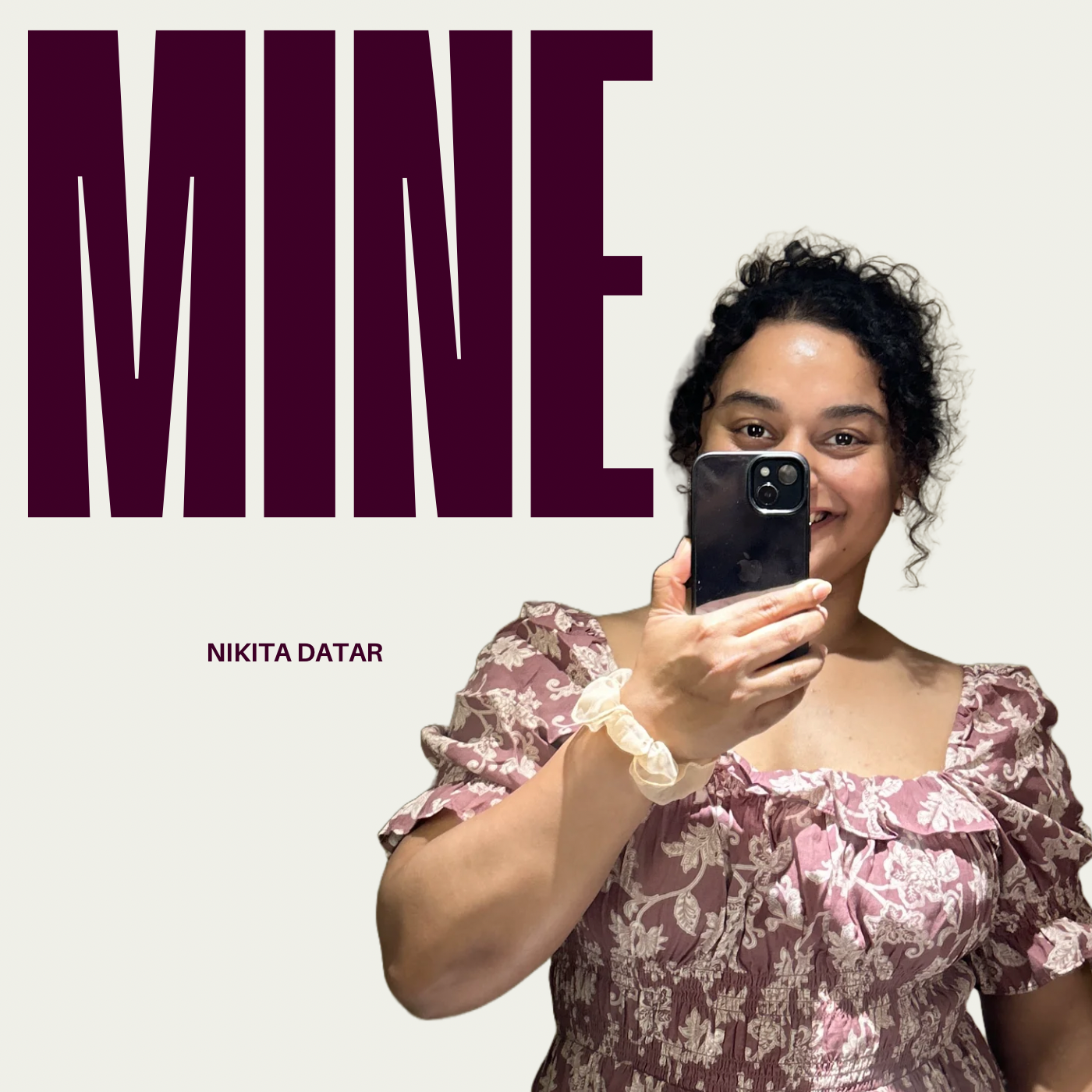
I finished MINE on one of the worst days of my life.
I was sitting on a terrace crying about something I had been carrying for years. The song came quickly. It was honest in a way I had not been honest before, in a song or anywhere else. I recorded a voice memo of it that night, played it back once, and then I closed the folder.
That was two years ago.
What I did for two years is something a lot of people who make personal creative work will recognize: I worked on everything else. I wrote other songs. I worked on the project. I got better at things technically. The folder with MINE in it stayed closed. Every few months I would open it, listen once, close it again.
I told myself it was not ready. I told myself the production needed more work. I told myself I was waiting for the right time.
These were not lies, exactly. They were the surface version of something true. But the actual thing underneath them was simpler and harder: I was afraid of what would happen when the most honest thing I had ever made was in the world where people could hear it.
What the research says about creative hiding
Brené Brown, a research professor at the University of Houston whose work on vulnerability has been cited extensively in both academic literature and popular culture, has studied what she calls the vulnerability paradox. In her research with artists, writers, and creatives, she found a consistent pattern: the work people most want to make is also the work they are most afraid to release. The inverse relationship between personal meaning and willingness to share is not incidental. It is structural.
The more something means to you, the more it reveals about you. The more it reveals about you, the more there is to lose if it is rejected. The most honest work is always the most exposed work, and exposure carries risk that the safer, less personal work does not.
Psychologist Mark Leary at Duke University, whose research on self-presentation and social anxiety spans several decades, found that people regulate their self-disclosure to manage what he calls socio-meter level, a measure of their sense of belonging and acceptance. His research showed that people are most willing to disclose information about themselves when the disclosure is unlikely to threaten their standing with others, and most likely to suppress disclosure when the information is vulnerable, unusual, or likely to be misunderstood.
A song about still longing for your mother as a grown woman is the kind of disclosure that trips every one of those categories. Vulnerable: yes. Unusual, in the sense that the feeling is common but rarely spoken: yes. Likely to be misunderstood: possible. The rational part of my brain, assessing the risk, kept voting to keep the folder closed.
What I was actually afraid of
Being seen accurately.
Not being misunderstood. That is the easier fear, and also the one that is more socially acceptable to admit. Easier to say "I was afraid people wouldn't get it" than to say the actual thing, which is: I was afraid people would get it exactly.
Because if they got it, then it was real. The longing, the grief, the reaching, the way some part of me has spent thirty years still looking for something that was not quite given. All of that would be not just real but public. In a song. With my name on it. For anyone to listen to.
Psychologist James Pennebaker at the University of Texas at Austin, whose research on expressive writing and disclosure has produced over three hundred studies, found that the act of putting personal experience into structured form and sharing it has measurable physiological and psychological effects. His research found that people who write and share about difficult emotional experiences show improvements in immune function, lower levels of stress hormones, and better psychological integration of the experience over time. The sharing is not incidental to the benefit. It is part of what produces it.
But Pennebaker's research also shows why sharing is hard: it requires the person to fully own the experience being shared. You cannot share halfway. The act of putting something into a song, writing it down, putting your name on it, is an act of claiming: this is what happened. This is what I felt. This is real.
For two years, the folder stayed closed because I was not ready to claim it.
What finally made me stop
There was a moment, about six months ago, when I realized I was going to carry this song to the end of my life having never released it. That it was going to sit in a folder on a hard drive, finished and unheard, because I had decided the risk was too great.
And something about seeing that clearly, as a choice I was making rather than a circumstance I was in, shifted something.
Researchers including Carol Dweck at Stanford University have written extensively on the difference between fixed and growth orientations, but the piece that applied here was simpler than that framework: I had to ask myself which I would regret more. Releasing the song and having it received badly. Or not releasing it at all.
The answer was immediate and obvious and I had been avoiding knowing it.
The song is about moving toward being mine. One step closer to belonging to yourself. That is what the chorus says. And I was sitting on the most honest thing I had made, keeping it safe in a folder, belonging to the fear instead of to myself.
Releasing it was not a moment of courage in the sense of overcoming fear. The fear was still there. It is still there. Releasing it was a decision that the fear did not get to be the last word.
What this is for other people
If you are sitting on the most honest thing you have ever made, I want to tell you that the sitting is not a character flaw.
It is an accurate response to real risk. The honest work is genuinely more exposed. The people who tell you to "just share it" are often people who have either not made something that exposed or have already done the work of deciding that the risk is worth it.
The question is not whether the risk is real. It is whether you can make the same decision I had to make: that the alternative, carrying the work forever and not letting it out, is a worse outcome than whatever might happen when it is heard.
For some people the timing is genuinely wrong and waiting is right. But for most people, the timing that feels wrong is the fear making itself useful by providing a reason that is almost true.
The most honest work you have made is the work that most needs to be in the world. Not because the world owes it an audience. Because you made it in order to be understood, and it cannot do that in a folder.
Let it out.
Nikita Datar · Debut Original · September 25, 2026
MINE
Now available on all streaming platforms
Listen to MINE →Continue exploring