I Chose to Sing This Song in My Own Voice Instead of Using AI. Here Is Why.
On the difference between art that can be made by anyone and art that could only be made by you.
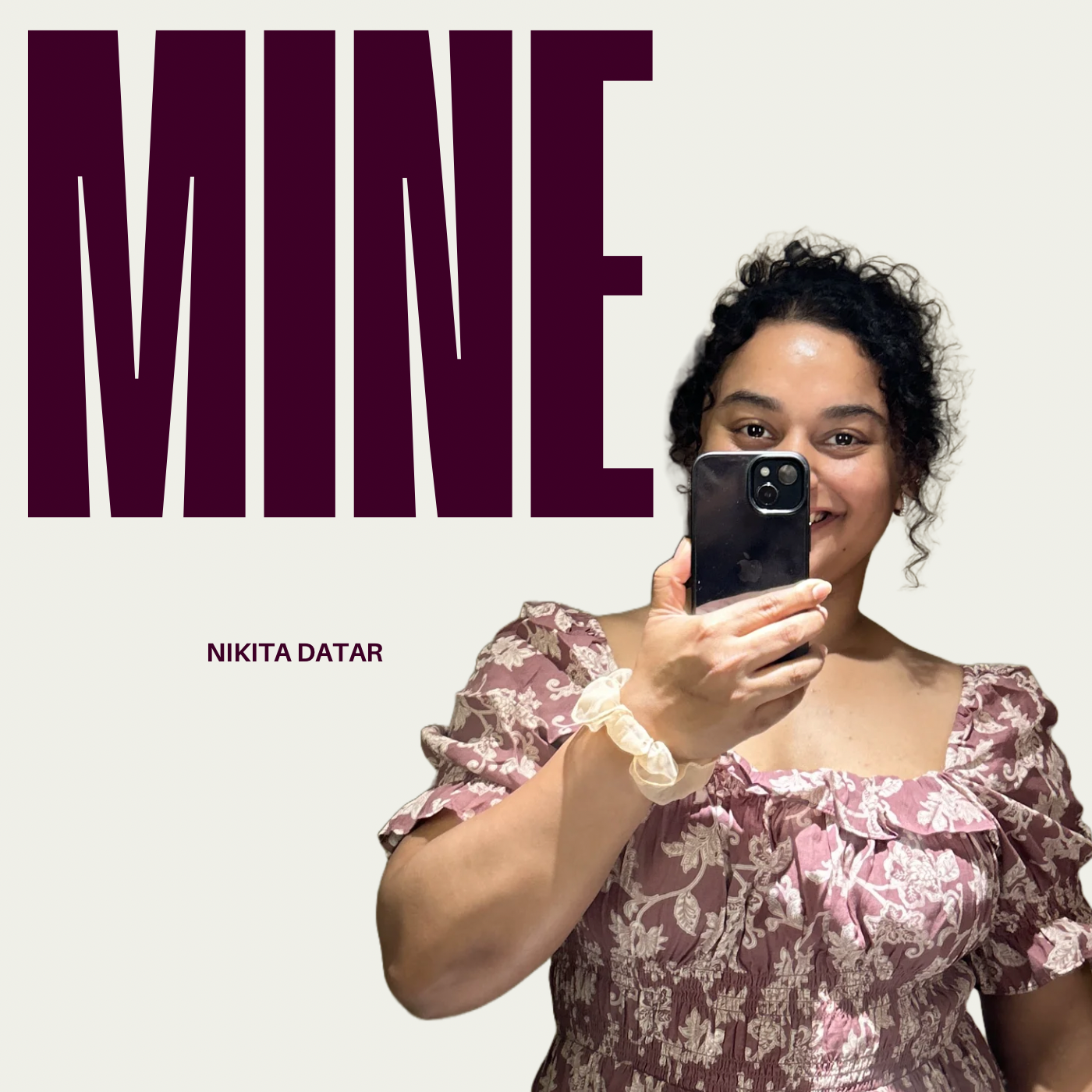
When I finished writing MINE, the obvious next question was: who sings it.
I am an author. I publish books. I run a website. I have never released a song before. The options I was looking at in 2024, when I wrote the song, ranged from hiring a vocalist to using one of the AI voice tools that had become good enough by then that most listeners could not reliably identify them as artificial.
I spent time with both options. And then I spent two years not making a decision, which was itself a decision, though I did not understand what it was protecting at the time.
The thought that finally resolved it was not complicated. It arrived whole and quiet and did not argue with itself: this song does not deserve an AI voice. It deserves mine. Because it is my story. I wrote it. I lived it. And the only voice with any right to sing it is the one that was inside the experience when the words came out.
What AI voice tools can actually do in 2026
I want to be honest about this because the dismissal of AI voice tools is often based on assumptions that are two or three years out of date.
The current generation of AI vocal synthesis tools can produce voices that are emotionally expressive, stylistically consistent, and, in double-blind listening studies conducted by researchers at Queen Mary University of London in 2025, indistinguishable from human voices for a significant percentage of listeners when the audio quality is controlled for. They can be trained on a target voice with relatively little input data. They can be directed toward specific emotional registers. They can produce a technically clean, emotionally coherent performance.
This is real. These tools are sophisticated and capable. Understanding their actual capability is important, because the argument for not using them is not that they are bad at what they do. The argument is about something else entirely.
What they cannot do
AI voice tools reproduce a voice. They do not reproduce an experience.
The voice on a song is not just a delivery mechanism for the words. It is the record of a body having felt something. The specific catch in a particular phrase. The places where the breath is shorter than expected. The note held a half-second longer than the melody technically requires. These are not technical choices. They emerge from the body's memory of what the song came from.
Stefan Koelsch, a neuroscientist at the University of Bergen who has spent over two decades studying how the brain processes music and emotion, has documented that listeners respond not just to the acoustic content of a voice but to the emotional authenticity markers within it, specific variations in vocal onset, vibrato, and pitch trajectory that the nervous system reads as evidence of felt emotion versus performed emotion. The listener's brain is doing an authenticity check that happens below conscious awareness.
An AI voice trained on a real voice can pass many of these checks. But it cannot pass the check that is specific to THIS experience, this song, this body that sat in a room on one of the worst days of its life and let something come out of it. That voice is unrepeatable. Not because AI is limited. Because the experience itself is singular.
When technology becomes protection rather than tool
There is another reason I spent two years not deciding, and it is less flattering to acknowledge.
The AI voice option was not just practical. It was a way of maintaining the architecture of protection that I have built around my work for years. Brand names, pen names, imprints, all the structures I have used to put distance between myself and what I made. If an AI voice sang the song, then technically I had not sung it. There was still a layer. If something did not land, the voice was the layer, not me.
Brené Brown, in her research on vulnerability and creative courage at the University of Houston, has documented what she calls "the vulnerability hangover," the specific dread that follows any act of full creative exposure. The dread is real. The impulse to protect against it is real. But the protection also costs something. The layer that protects you from failure is the same layer that protects you from connection.
The readers I am most in contact with are people who feel me in my books. The books I am most in contact with are the ones where I stayed closest to what was true for me, rather than what was safe to say.
MINE is the most honest thing I have ever made because it has no layer at all. My voice. My name. My story. And every consequence, including the ones I was afraid of, is also mine.
What this has to do with your work
I am not making an argument against AI tools in creative work generally. I use them. They have real utility.
I am making a specific argument about this specific category of work: the art that is so personal that using a tool to mediate it is a way of not quite releasing it.
If you have something that is fully yours, that came from something you actually survived, that carries the kind of truth that does not benefit from production polish or professional distance, the question worth asking is not whether the technology could do it adequately. The question is whether you want to release the art or whether you want to release a version of the art that keeps you safe.
Those are different things. And the one worth releasing is the harder one.
I wrote MINE on one of the worst days of my life, in my own voice, with my own name on it, because after two years of waiting, it deserved nothing less.
For more on why personal work takes the longest to release, read Why the Most Personal Thing You've Ever Made Is Always the Hardest to Release.
For the full story of what happened the day I finally stopped waiting, read the original essay: I Wrote My Song MINE on One of the Worst Days of My Life.
Nikita Datar · Debut Original · September 25, 2026
MINE
Now available on all streaming platforms
Listen to MINE →Continue exploring